
Every great cosmetic formula begins not with an active, but with a feeling. The moment a formula meets the skin, the first glide, the subtle resistance, the after-feel: these sensory moments create an immediate perception of quality long before any claim is even discussed.
In formulation science, that first impression is driven to a large extent by the emollient phase. It is the medium that translates chemistry into touch, turning a formula into an experience. Yet despite its central role, the emollient phase is often selected too late in the design process, as if it were interchangeable. It isn’t.
Technically, emollients form the sensorial backbone of a formulation. They shape spreading (how a system distributes and how long it “plays” before settling), film behaviour, perceived friction during rub-in, and dry-down (how feel evolves over time). These variables influence user perception, but they also matter operationally: how the oil phase behaves during manufacturing and scale-up, how consistently it performs across batches, and how stable its organoleptic profile remains under real storage and handling conditions.
In the literature, hydration mechanisms and TEWL are often discussed as general context for why oil-phase films and partial occlusion can matter in cosmetic systems. That framework can help teams think clearly about the role of lipids in a formula, but it should not be read as a finished-product performance claim for an intermediate material on its own. In serious development work, the more practical question is: “Can we engineer a target sensory signature and reproduce it reliably?” And that requires measurement, not guesswork.
That is why modern sensorial design is increasingly supported by methodology: tribology/friction (slip vs drag), spreading metrics, pay-off/transfer (residue and transfer behaviour), and oxidative/organoleptic stability tracking under defined conditions. In other words, turning “feel” into an engineering target.
Olive-origin squalane, with its saturated molecular structure, is valued for its relative oxidative stability and its widespread use as a lightweight emollient. In sensorial engineering, it offers something fundamental: a consistent baseline to build on. When the goal is repeatability and long-term organoleptic control within the oil phase, consistency is not a minor benefit. It is the foundation.
A formula’s tactile signature acts as a quiet indicator of quality. Texture becomes more than a sensorial detail; it becomes a language that defines how a product is remembered. Brands may change actives, but they rarely want the feel of their hero products to drift over time or vary from batch to batch.
Teams that master tactile precision, balancing cushion, glide, and dry-down, often accelerate development for a simple reason: sensorial targets stop moving. In that sense, formulation is also a form of storytelling, but with industrial constraints: how it feels defines how it is perceived, and how well it repeats defines how much it is trusted.
Developed by Naturol, ESSENTIKA - SQA shows how emollients can evolve from commodity inputs into strategic design tools for formulators. Each blend in the range (Basik, Calm, Silk, Glow, Olive, Dry) combines:
Further reading: Squalane: The Science, Benefits, and Sustainability of a Skincare Star.
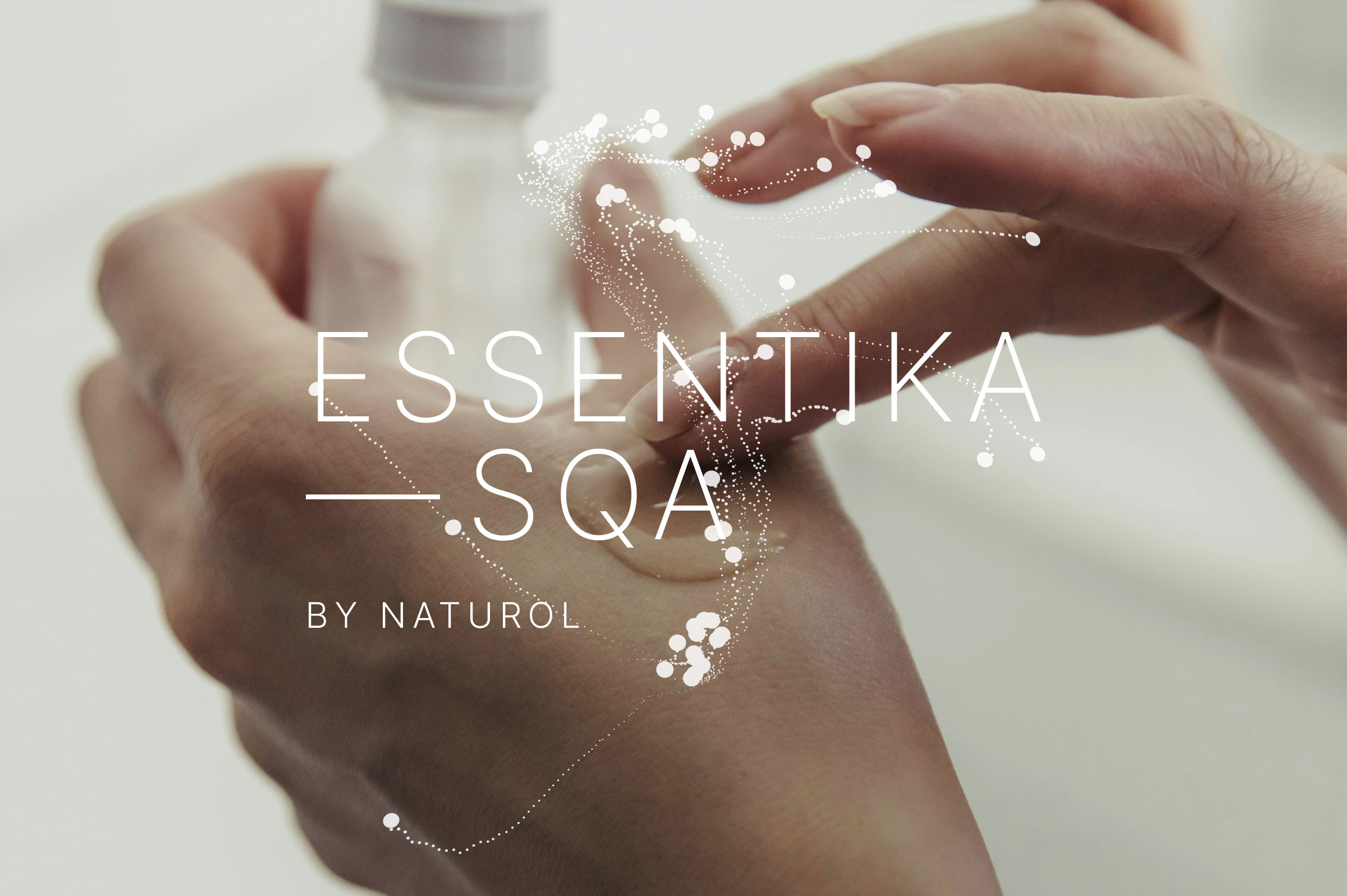
This architecture helps formulators build more predictable sensorial targets and maintain consistent sensory profiles across production batches, shifting texture management toward an engineered, less trial-and-error process.
Practically, that means three things R&D teams value:
Texture has become the new logo of beauty.Consumers may forget ingredient lists, but they remember how a product feels.Through Essentika, Naturol proposes a paradigm where texture equals brand language, and where sensorial performance becomes measurable, repeatable, and sustainable.
In a market crowded with claims, well-engineered texture is a quiet form of credibility. ESSENTIKA turns the oil phase into a space for sensorial engineering: measurable, repeatable, and ready to integrate into third-party formulations. Because in the end, the science of touch is a discipline - it can be built, measured, and controlled.